If an adult tooth is knocked out, pick it up by the crown (the white part), rinse it for a few seconds if it's dirty, and gently push it back into the socket. If you can't, keep it in milk, saline, or your own saliva, never dry. Get to a dentist immediately: a tooth put back within 15 minutes has the best chance of surviving, and after 60 minutes out of the mouth dry, it usually can't be saved.
A knocked-out tooth (dentists call it an avulsed tooth) is one of the few dental problems where minutes truly matter. The root is covered in living cells that hold the tooth in the jawbone. Once those cells dry out, they die, and the tooth can no longer reattach properly.
What to Do Right Now: Step by Step
- Find the tooth and pick it up by the crown. Don't touch the root, the yellowish part that was under the gum.
- If it's dirty, rinse it briefly. Use milk, saline, or cold water for a few seconds. Don't scrub it, use soap, or wrap it in a tissue.
- Try to put it back in the socket. Check it's facing the right way, then push it gently into place. Bite softly on a clean cloth or gauze to hold it there.
- If you can't put it back, keep it wet. In order of preference: a tooth preservation kit (such as Save-a-Tooth), cold milk, saline, or saliva (spit into a cup, or hold it inside your cheek if you're an adult and won't swallow it). Water is fine for a quick rinse but not for storage.
- Get to a dentist or emergency dental clinic now. Bring the tooth with you.
How Long Do You Have to Save a Knocked-Out Tooth?
The clock that matters is how long the tooth spends out of the mouth, dry.
|
Time Out of the Mouth
|
What it Means
|
|
Put back within about 15 minutes
|
Best chance: the root cells are most likely still alive
|
|
Stored in milk, saline, or saliva, under 60 minutes total dry time
|
Good chance: cells may be compromised but can still survive
|
|
More than 60 minutes dry
|
The root cells are no longer viable. A dentist may still replant it to preserve the bone, but long-term survival is poor
|
That's why storage matters so much. A tooth in milk has far better odds than one in a pocket or napkin.
Should You Put a Baby Tooth Back in?
No. Never try to put a baby (primary) tooth back into the socket. Doing so can damage the adult tooth developing underneath. Keep the baby tooth, stop the bleeding with gentle pressure, and call a dentist to check for other injuries. See our guide to dental emergencies in children.
When to Go to the Emergency Room Instead
Go to the ER, or call 911, if the tooth was knocked out along with:
- A head injury, loss of consciousness, confusion, or vomiting
- Bleeding that won't stop after 10–15 minutes of firm pressure
- A possible broken jaw: you can't close your mouth normally, or your teeth no longer meet the way they did
- Deep cuts to the lips, tongue, or face that may need stitches
Head and neck injuries come first. The tooth can travel with you in milk.
How a Virtual Dentist Can Help with a Knocked-Out Tooth
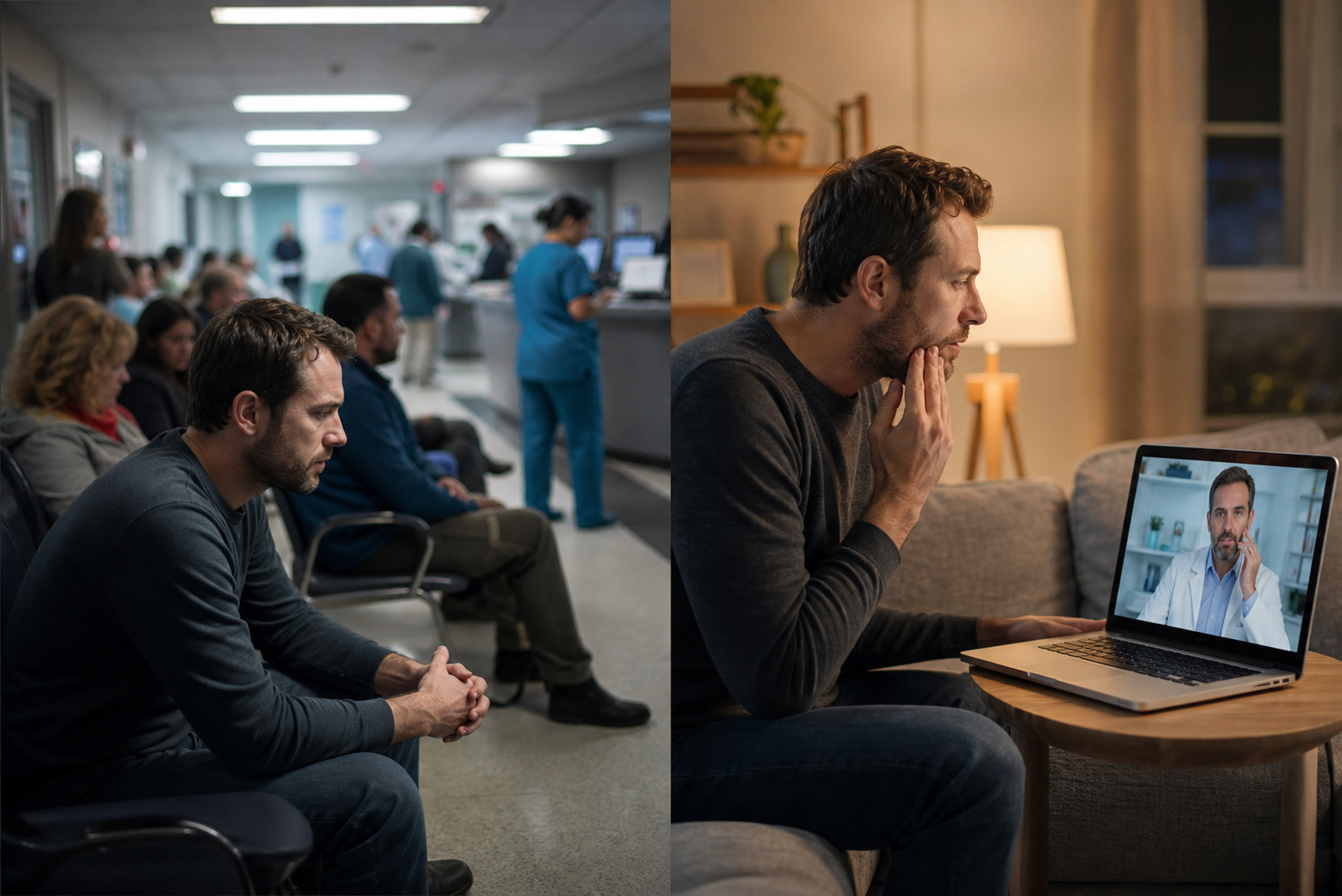
A knocked-out tooth needs hands-on treatment. A dentist has to reposition it and splint it to the neighboring teeth. A virtual visit can't replace that, but it can help in the moments that decide the outcome:
- Right now: a licensed dentist can walk you through replanting or storing the tooth over video, and tell you how urgently to be seen.
- After hours: if your dentist's office is closed, a teledentist can help you figure out where to go.
- Afterward: follow-up questions about pain, swelling, or whether a replanted tooth is healing normally.
Teledentistry.com connects you with a dentist licensed in your state 24/7, including nights, weekends, and holidays. Talk to a Teledentistry.com dentist now, but don't let a call delay getting the tooth back in its socket.
What Happens at the Dentist
The dentist cleans the area, puts the tooth back in position if it isn't already, and splints it to the neighboring teeth, usually for about two weeks. Most replanted adult teeth need a root canal afterward. You'll also have follow-up visits over the next year to check the tooth is holding, and the root isn't breaking down.
How to Prevent a Knocked-Out Tooth
Most knocked-out teeth happen during sports, falls, and accidents. A mouthguard for contact sports, including basketball, hockey, soccer, and skateboarding, is the single best prevention.
How Can Teledentistry.com Help During a Dental Emergency?
Teledentistry.com connects you with licensed dentists 24/7 for professional assessment of your symptoms. Dentists can determine the urgency of your situation, prescribe medications, and recommend appropriate next steps.
This service helps you avoid unnecessary ER visits while ensuring you get the guidance you need. Virtual consultations are affordable and accessible from any device with internet access.

.png)
.webp)