Go to the ER for a toothache only if you have swelling that's spreading to your eye, jaw, or neck, trouble breathing or swallowing, a high fever, or a serious facial injury. For most toothaches, the ER can't fix the cause: it can offer pain relief and antibiotics, then refer you to a dentist. A dentist, including a virtual dentist available 24/7, is usually the faster and cheaper first step.
Every year, Americans make an estimated 2 million emergency room visits for dental pain, according to the American Dental Association (ADA). Most hospitals can't provide dental treatment, so many of those patients leave with a prescription and the same underlying problem. The ADA estimates an ER dental visit costs about three times as much as a dentist visit, averaging $749 when the patient isn't admitted.
When a Toothache is an ER Emergency
Go to the ER, or call 911, if a toothache comes with any of these:
- Swelling spreading to your eye, under your jaw, or down your neck
- Trouble breathing or swallowing, or you can't open your mouth normally
- High fever or feeling very unwell, with chills, confusion, or a racing heart
- A serious injury to the face or jaw, a possible broken jaw, or a head injury
- Bleeding that won't stop after 10–15 minutes of firm pressure
These can be signs of a spreading infection or major injury that needs hospital care. Don't wait for a dental appointment. Read more on when dental swelling is dangerous.
When a Dentist is the Better Choice
Most toothaches don't need an ER. See a dentist, in person or online, for:
- Throbbing or constant tooth pain, including pain that keeps you up at night
- Pain when biting, or sensitivity to hot and cold
- A cracked, chipped or broken tooth without major facial injury
- A lost filling or crown
- A gum bump or pimple near a tooth, or mild swelling around one tooth
- Pain after a filling, extraction, or root canal
These need a dental diagnosis. A dentist can tell you what's causing the pain and how urgently it needs treatment.
ER vs. Urgent Care vs. Virtual Dentist vs. Dental Office
| |
ER
|
Urgent care
|
Virtual Dentist
|
Dental Office
|
|
Best for
|
Spreading swelling, breathing or swallowing trouble, serious injury
|
Minor injuries when no dentist is available
|
Diagnosis, triage and prescriptions any time, including nights and weekends
|
Treating the cause: fillings, drainage, root canals, extractions
|
|
Can diagnose the dental problem?
|
Limited, usually no dentist on staff
|
Limited, usually no dentist on staff
|
Yes, a licensed dentist
|
Yes
|
|
Can prescribe antibiotics?
|
Yes
|
Yes
|
Yes, when appropriate
|
Yes
|
|
Can fix the tooth?
|
Rarely
|
No
|
No, but can tell you what you need and how soon
|
Yes
|
|
Typical wait
|
Hours, depending on the hospital
|
Varies
|
Callback within 30 minutes at teledentistry.com
|
Often days for a new patient
|
|
Typical cost
|
Highest: about $749 on average, per the ADA
|
Moderate
|
$60 self-pay at teledentistry.com, or covered by many dental plans
|
Varies by treatment
|
Why the ER Often Can't Fix a Toothache
Most ERs don't have a dentist or dental equipment. They can treat dangerous infections and injuries, manage pain, and prescribe antibiotics, but they typically can't drain a tooth abscess, do a root canal, or extract a tooth. So the pain may come back once the medication wears off, and you'll still need a dentist.
What to Do for a Toothache Tonight
- Check for red flags. If you have any of the ER signs above, go now.
- Talk to a dentist. A virtual dentist can diagnose what's likely going on, prescribe antibiotics if there are signs of infection, and tell you whether you need to be seen in person tomorrow or sooner.
- Manage the pain safely. Use an over-the-counter pain reliever as directed on the label, rinse with warm salt water, and keep your head raised when you lie down.
- Book in-person treatment. Antibiotics and pain relief buy time; they don't fix the tooth.
How Teledentistry.com Helps a Toothache at Night
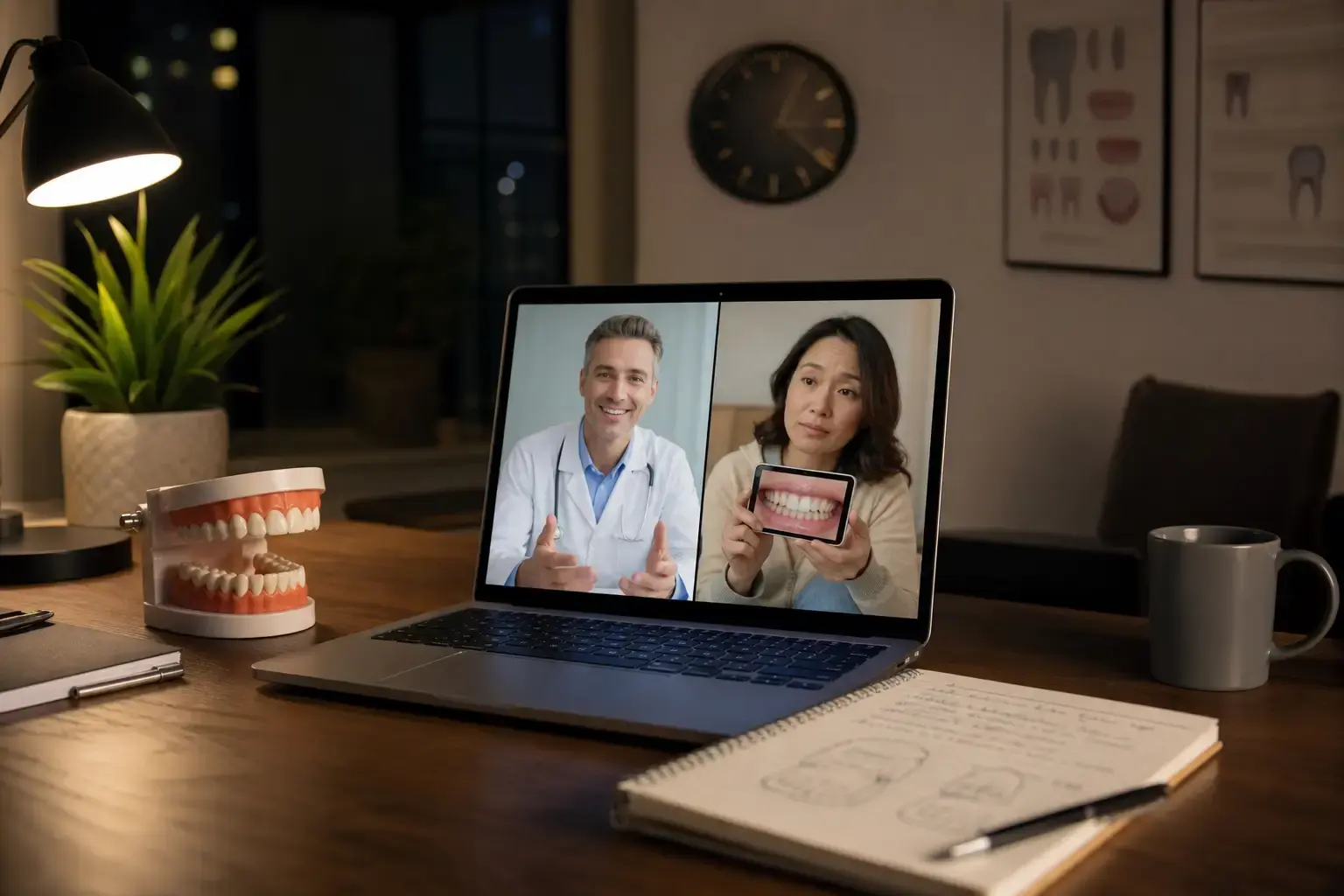
Teledentistry.com connects you with a dentist licensed in your state, 24/7, in all 50 states, usually with a callback within 30 minutes. The dentist can assess your symptoms over video, send prescriptions to your pharmacy when appropriate, tell you whether you need the ER, and help you find in-network in-person care. We don't prescribe controlled substances such as opioids. Talk to a dentist now.

%20(1).webp)