
Why Won't My Bad Breath Go Away?
Everyone has bad breath occasionally — after coffee, garlic, or first thing in the morning. But breath that stays bad no matter how much you brush, floss, or use mouthwash is usually pointing to something else, most often bacteria trapped below the gumline or on the back of the tongue.
Dealing with breath that won't quit? Talk to a licensed dentist online in minutes — insurance accepted or a flat $60 fee, available 24/7.
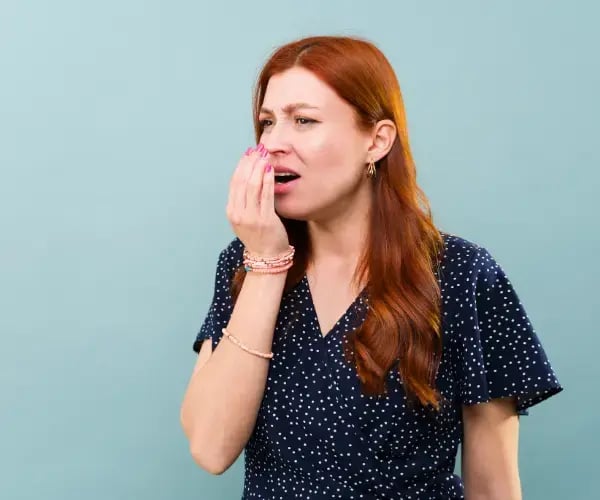
Common Causes of Persistent Bad Breath
Dealing with breath that won't quit? Talk to a licensed dentist online in minutes — insurance accepted or a flat $60 fee, available 24/7.
Gum disease
Bacteria trapped in gum pockets produce sulfur compounds that cause a persistent odor.
Tooth Decay
Cavities can trap food and bacteria, contributing to bad breath.
Dry Mouth
Saliva helps clear bacteria; reduced saliva flow (from medication, mouth breathing, or dehydration) lets odor-causing bacteria build up.
Bacteria on the Tongue
The back of the tongue is a common source of odor-producing bacteria that brushing alone often misses.
Poor-Fitting Dental Appliances
Dentures, retainers, or aligners that trap food particles can retain odors.
Sinus or Throat Issues
Post-nasal drip and chronic sinus infections can contribute to persistent bad breath.
Diet and Habits
Tobacco use and certain foods create a lingering odor beyond normal brushing.
Is Persistent Bad Breath Normal - or a Sign of Something Serious?
How to Improve Bad Breath at Home
- Brush your tongue gently, especially the back, or use a tongue scraper.
- Floss daily to remove trapped food and plaque between teeth.
- Stay hydrated and chew sugar-free gum to stimulate saliva.
- Use an antibacterial mouthwash rather than one that only masks odor temporarily.
- Cut back on tobacco, which contributes significantly to persistent bad breath.
- Keep up with regular dental cleanings to remove buildup brushing can't reach.
.webp?width=600&height=500&name=bad%20breath%20(1).webp)
When to See a Dentist About Bad Breath
- Bad breath persists despite consistent brushing, flossing, and mouthwash
- It's paired with bleeding or swollen gums
- You notice a bad taste along with the odor
- You have dry mouth that doesn't improve with hydration
- It's a new, unexplained change for you
See a doctor as well if bad breath is paired with other symptoms unrelated to your mouth, like chronic sinus congestion or digestive issues, since the cause may not be dental.
.webp?width=600&height=500&name=Timeline%20Imagery%20(1).webp)
How a Virtual Dental Visit Works
Stop guessing and get a real answer. Connect with a licensed dentist online in minutes, 24/7 — insurance accepted or a flat $60 fee.

Quick Form Completion
Speak to a Dentist Online
Get Fast Relief
Get Answers Quickly
This often points to an underlying cause like gum disease, dry mouth, or bacteria on the tongue rather than a hygiene issue alone.
Yes, chronic bad breath is a common early symptom of gum disease.
Treating the root cause — whether that's gum disease, dry mouth, or tongue bacteria — is the most effective long-term fix.
Some mouthwashes only mask odor temporarily. An antibacterial mouthwash that targets the bacteria causing the smell is more effective than one that just adds fragrance.
Yes. Saliva naturally washes away bacteria and food particles; when saliva flow is reduced, bacteria build up more easily and cause odor.
Yes. A licensed dentist can review your symptoms and habits, assess for signs of gum disease over video, and recommend next steps, including whether an in-person exam is needed.
Emergency Dental Services Available
Need immediate care or peace of mind? Contact us now to talk to a dentist virtually. Don't wait to be seen - call now.