
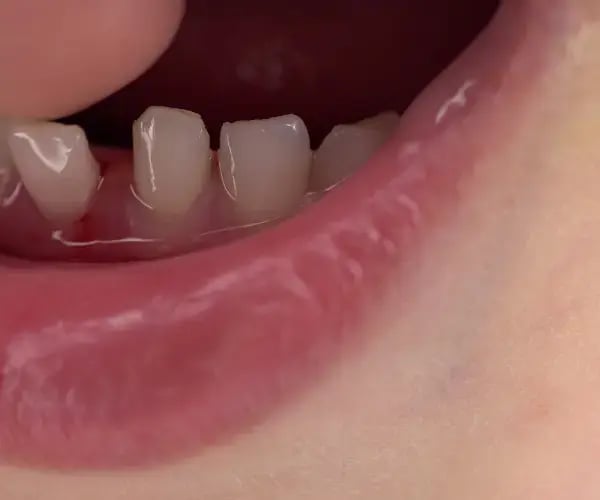
Why Is My Tooth Loose or Shifting?
In children, a loose tooth is a normal part of growing up. In adults, it's never "normal" — it usually signals gum disease, bone loss, an injury, or grinding-related pressure. Catching it early gives you the best chance of saving the tooth.
Noticed a loose or shifting tooth? Talk to a licensed dentist online in minutes — insurance accepted or a flat $60 fee, available 24/7.
Common Causes of Loose or Shifting Teeth
Noticed a loose or shifting tooth? Talk to a licensed dentist online in minutes — insurance accepted or a flat $60 fee, available 24/7.
Periodontitis (Advanced Gum Disease)
The most common cause in adults is infection, which breaks down the bone and ligaments that hold teeth in place.
Teeth Grinding or Clenching
Ongoing pressure can loosen teeth over time, especially when bite forces are uneven.
Trauma or Injury
A blow to the mouth can loosen a tooth even without visibly breaking it.
Bone loss
Can result from long-term gum disease, osteoporosis, or other conditions affecting jaw bone density.
Pregnancy Hormones
Can temporarily loosen teeth slightly due to changes in the ligaments supporting them.
Orthodontic Movement
If you're in active treatment or not wearing a retainer as directed, teeth can shift.
Is It Normal as an Adult to Have Loose or Shifting Teeth?
What You Can Do Right Now for Loose or Shifting Teeth
- Avoid chewing on the loose tooth or hard foods on that side.
- Keep up gentle brushing and flossing — don't skip the area out of fear of worsening it.
- Rinse with warm salt water if gums are tender or inflamed.
- If it followed an injury, avoid touching or wiggling the tooth further and seek evaluation promptly.
- Don't ignore it hoping it resolves — in adults, loose teeth typically don't improve without treatment.
When to See a Dentist for a Loose or Shifting Tooth
- Any noticeable looseness in an adult tooth
- Teeth that have visibly shifted or created new gaps
- Looseness paired with gum swelling, bleeding, or pain
- A tooth that became loose after an injury
- A bite that feels different than it used to
Go to emergency care instead if a tooth was knocked out entirely or is severely displaced following trauma — time matters for saving a tooth in these cases.
How a Virtual Dentist Visit Works for Loose or Shifting Teeth
Call or Chat With Us Anytime
Fill out a short intake form describing what you're noticing and when it started — available 24/7.

Talk to a Dentist Right Away
Connect with a licensed dentist over live video to discuss your symptoms and dental history.
Get Fast Emergency Dental Care
Get a plan — including likely causes, home care guidance, and a referral for in-person treatment like a deep cleaning or splinting if needed.

Get Answers Quickly
No, unlike baby teeth, adult teeth becoming loose usually signals an underlying issue, such as gum disease or bone loss.
Often, yes— especially if caught early. Treatment depends on the underlying cause.
Gum disease, bone loss, teeth grinding, and missing teeth nearby can all cause shifting.
Shifting can happen due to gum disease, bone loss, tongue or jaw habits, grinding, or the natural aging of supporting tissues — it's not exclusive to orthodontic movement.
Not necessarily. Mild looseness caught and treated early — especially when caused by gum disease — often stabilizes with the right treatment.
A virtual dentist can review your symptoms and history, assess visible signs over video, and guide you on urgency and next steps, including whether you need an in-person exam or treatment.
Emergency Dental Services Available
Need immediate care or peace of mind? Contact us now to talk to a dentist virtually. Don't wait to be seen - call now.