

Why Does My Jaw Hurt or Click When I Open My Mouth?
A clicking, popping, or aching jaw is common and often linked to the temporomandibular joint (TMJ) — the hinge that connects your jaw to your skull. Occasional clicking without pain usually isn't a concern. Pain, stiffness, or trouble opening your mouth fully is worth looking into, since it can affect eating, speaking, and sleep if left unaddressed.
Dealing with jaw pain or clicking? Talk to a licensed dentist online in minutes — insurance accepted or a flat $60 fee, available 24/7.
Common Causes of Jaw Pain or Clicking
Dealing with jaw pain or clicking? Talk to a licensed dentist online in minutes — insurance accepted or a flat $60 fee, available 24/7.
TMJ Disorder (TMD)
Dysfunction in the jaw joint or surrounding muscles, causing clicking, popping, or pain when chewing or talking.
Teeth Grinding or Clenching (bruxism)
Often happens at night and puts ongoing strain on the jaw joint and muscles.
Stress-Related Muscle Tension
Clenching your jaw during stressful periods can cause soreness and stiffness.
Jaw Injury or Trauma
A blow to the face or jaw can damage the joint or surrounding tissue.
Arthritis
Can affect the jaw joint just as it does other joints in the body.
Misaligned Bite
Teeth that don't meet evenly can put uneven pressure on the jaw joint over time.
Is My Jaw Pain Normal - or a Sign of Something Serious?
How to Ease Jaw Pain at Home
- Stick to soft foods and avoid chewing gum or hard, crunchy items.
- Apply a warm compress to relax tense jaw muscles, or a cold pack to reduce acute pain.
- Practice gentle jaw stretches as recommended by a dental professional.
- Be mindful of clenching during the day, especially when stressed or concentrating.
- Take an over-the-counter anti-inflammatory if needed.
- Ask about a nightguard if grinding is a likely cause.
When to See a Dentist for Jaw Pain or Clicking
- Pain that doesn't improve with rest and home care
- Your jaw locks open or shut, even briefly
- Difficulty fully opening your mouth or chewing
- Clicking accompanied by pain, not just noise
- Jaw pain following an injury
Go to emergency care instead if you have a jaw injury with visible deformity, can't close your mouth at all, or have severe swelling affecting your breathing.
How a Virtual Dental Visit Works
Talk to a licensed dentist online in minutes — insurance accepted or a flat $60 fee, available 24/7.
Call or Chat With Us Anytime
Fill out a short intake form describing your symptoms and when they started — available 24/7.
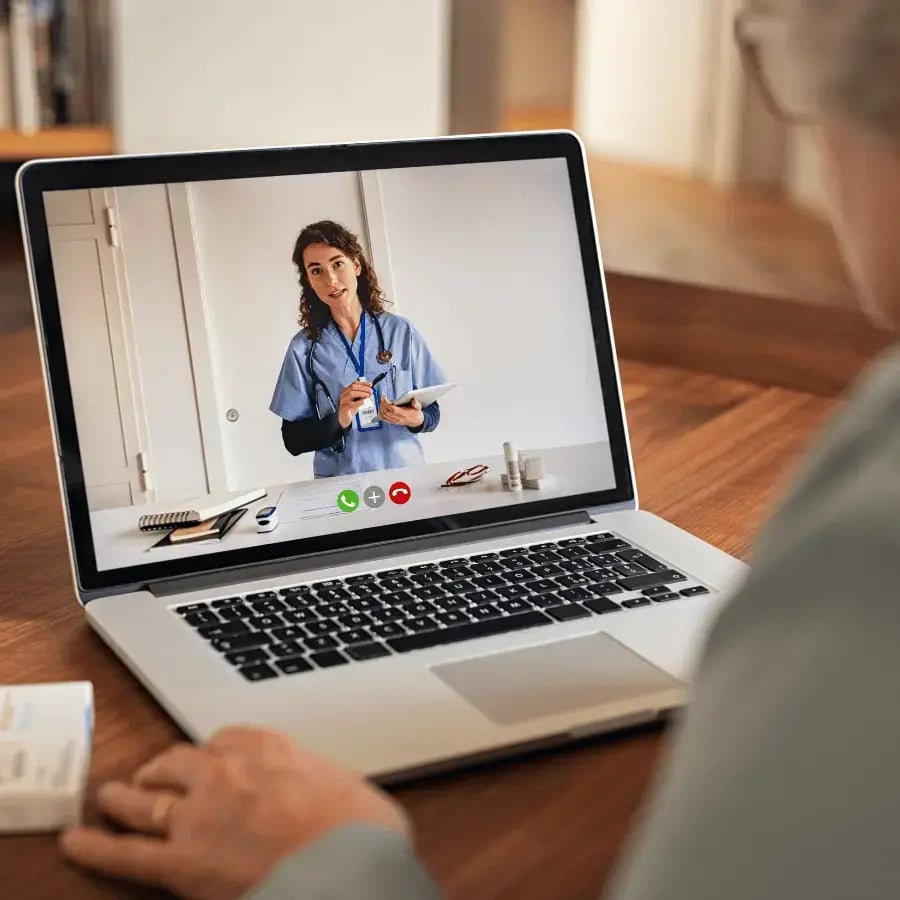
Talk to a Dentist Right Away
Connect with a licensed dentist over live video to discuss your jaw movement, pain patterns, and possible triggers like grinding or stress.
Get Fast Emergency Dental Care
Get a plan — including home care guidance, a nightguard recommendation, or a referral for further TMJ evaluation if needed.

Get Answers Quickly
Clicking is often related to the position of the jaw joint's disc and is commonly linked to TMJ disorder.
Clicking alone usually isn't serious, but if it's paired with pain or locking, it should be checked.
Yes, stress-related clenching and grinding are common causes of jaw pain and tension.
No. Painless clicking is common and often doesn't need treatment. It's worth addressing if it comes with pain, locking, or difficulty opening your mouth.
TMJ refers to the joint itself; TMD (temporomandibular disorder) refers to problems affecting that joint, including pain, clicking, or limited movement.
For many people, yes — a nightguard reduces the impact of grinding and clenching on the jaw joint and can meaningfully ease morning soreness over time.
A virtual dentist can assess your symptoms, discuss likely causes, and recommend home care or a nightguard.
Emergency Dental Services Available
Need immediate care or peace of mind? Contact us now to talk to a dentist virtually. Don't wait to be seen - call now.