
Why Do My Wisdom Teeth Hurt?
Wisdom tooth pain is usually caused by the tooth being impacted, coming in at an angle, or crowding nearby teeth, which can lead to pressure, swelling, and sometimes infection. A dentist can assess your symptoms and help determine if you need an oral surgery referral.
Common Causes of Pain in Your Wisdom Teeth
Dealing with wisdom tooth pain? Talk to a licensed dentist online in minutes — insurance accepted or a flat $60 fee, available 24/7.
Impacted Wisdom Teeth
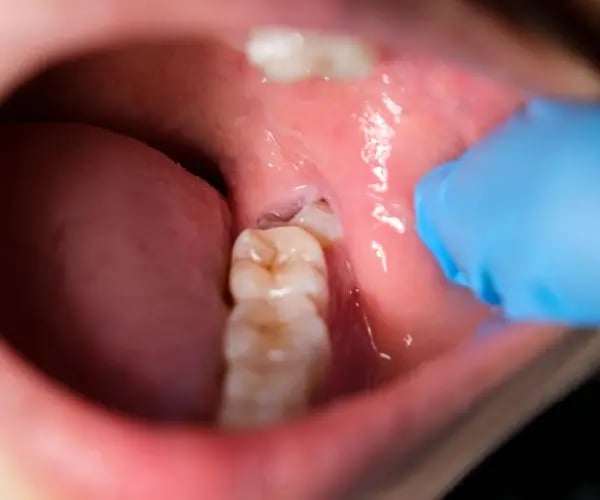
When there isn't enough room to fully emerge, teeth can grow at an angle or stay partially trapped under the gum.
Partial Eruption
A wisdom tooth that's only partway through the gum creates a flap of tissue where food and bacteria can get trapped, leading to infection (pericoronitis).
Crowding
Emerging wisdom teeth can push against neighboring molars, causing pressure and pain.
Cavities in Hard-to-Reach Places
Wisdom teeth are difficult to clean thoroughly, making them more prone to decay.
Cyst Formation
In some cases, a fluid-filled sac can develop around an impacted wisdom tooth.
Nerve Compression or Injury
Rarely, dental work, jaw trauma, or growths can affect a nerve directly, causing more persistent numbness.
How to Ease Wisdom Tooth Pain at Home
- Rinse with warm salt water to reduce irritation, especially if a flap of gum tissue is involved.
- Take an over-the-counter pain reliever or anti-inflammatory as directed.
- Apply a cold compress to the outside of your jaw for swelling.
- Keep the area clean by gently brushing and rinsing after meals to prevent trapped food.
- Stick to soft foods and avoid chewing directly on the area.

Is It Urgent — or Can It Wait?
Get answers before it gets worse. Connect with a licensed dentist online in minutes, 24/7 — insurance accepted or a flat $60 fee.
When to See a Dentist for Wisdom Tooth Pain
- Persistent or worsening pain in the back of your jaw
- Swelling or a flap of gum tissue near an emerging tooth
- Difficulty fully opening your mouth
- A bad taste or odor near the back molars
- Pain that spreads to your ear or the rest of your jaw
Go to emergency care instead if you have significant swelling affecting your ability to breathe or swallow, or a high fever accompanying the pain.
.webp?width=1200&height=900&name=TD%20(1).webp)
Talk to a Licensed Dentist About Your Wisdom Tooth Pain
Get answers before it gets worse. Connect with a licensed dentist online in minutes, 24/7 — insurance accepted or a flat $60 fee.

Quick Form Completion
Speak to a Dentist Online
Get Fast Relief
Get Answers Quickly
Signs include recurring pain, swelling, difficulty opening your jaw, or crowding of nearby teeth — a dentist can confirm with an exam or X-ray.
Yes, especially with partially erupted teeth that flare up periodically, often linked to trapped food or bacteria.
Usually not urgent, but significant swelling or trouble swallowing/opening your mouth should be seen quickly.
No. Wisdom teeth that come in fully, are properly aligned, and can be cleaned effectively often don't need removal. Impacted, painful, or problematic wisdom teeth typically do.
This is a common sign of wisdom teeth emerging or pressing against neighboring teeth, especially if there isn't enough room for them to come in fully.
Sometimes an infection around a partially erupted wisdom tooth can be managed with antibiotics and cleaning in the short term, but if the tooth is impacted or keeps causing problems, extraction is usually recommended.
Signs include persistent pain, swelling, difficulty opening your mouth fully, and a tooth that hasn't fully emerged after your late teens or twenties. A dental exam and X-ray can confirm impaction.
Yes. A virtual dentist can assess your symptoms, manage pain and infection with prescriptions if appropriate, and refer you to an oral surgeon for extraction if that's the right next step.
Emergency Dental Services Available
Need immediate care or peace of mind? Contact us now to talk to a dentist virtually. Don't wait to be seen - call now.