
Am I Grinding My Teeth at Night?
Waking up with a sore jaw, dull headaches, or noticeably worn or flattened teeth are common signs of nighttime teeth grinding (bruxism). A dentist can confirm the signs and recommend a nightguard or other treatment.
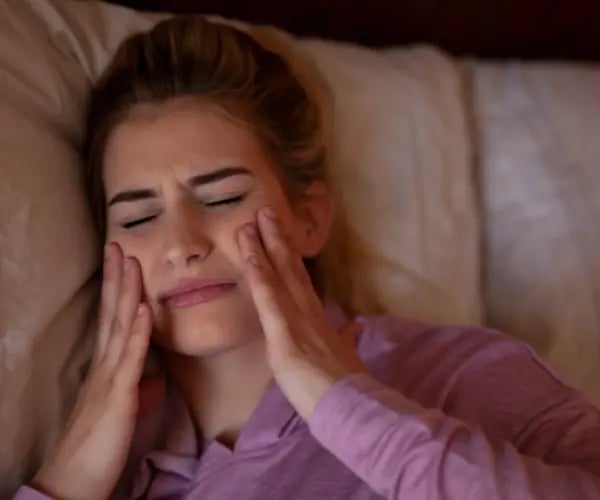
Teeth Grinding (Bruxism): Signs, Causes, and What Helps
Think you might be grinding your teeth? Talk to a licensed dentist online in minutes — insurance accepted or a flat $60 fee, available 24/7.
Waking Up with a Sore Jaw or Headache
One of the most common signs of nighttime grinding.
Visibly Worn or Flattened Teeth
A dentist can often spot grinding damage even if you're not aware you do it.
Increased Tooth Sensitivity
Enamel wear from grinding can expose more sensitive layers of the tooth.
Clicking or Popping Jaw
Grinding puts extra strain on the jaw joint over time.
Cracked Teeth or Damaged Fillings
Constant pressure can chip enamel or dislodge dental work.
How to Manage Teeth Grinding at Home
- Practice stress management techniques, since stress is one of the most common triggers.
- Reduce caffeine and alcohol, especially in the evening, as both can increase grinding.
- Be mindful of daytime clenching, especially when concentrating or stressed.
- Try jaw relaxation exercises before bed.
- A custom or over-the-counter nightguard can protect your teeth from further wear while other causes are addressed.
.webp?width=600&height=500&name=Timeline%20Imagery%20(1).webp)
Is My Grinding Something to Address?
Protect your teeth before the wear adds up. Connect with a licensed dentist online in minutes, 24/7 — insurance accepted or a flat $60 fee.
What a Virtual Visit Covers
Your dentist will ask about your symptoms, sleep habits, and stress levels, examine visible tooth wear if you share photos, and discuss options like a custom nightguard.
.webp?width=1200&height=900&name=TD%20(1).webp)
Talk to a Licensed Dentist About Teeth Grinding
In pain? Connect with a licensed dentist in minutes, get fast prescriptions, and start your treatment—all from the comfort of your home.

Quick Form Completion
Speak to a Dentist Online
Get Fast Relief
Get Answers Quickly
Morning jaw soreness or tightness, headaches, and flattened or chipped teeth are common indicators.
Yes, chronic grinding can wear down enamel, cause chips, and contribute to jaw pain over time if left untreated.
A custom nightguard, stress management, and addressing underlying causes like sleep apnea are common approaches.
Common signs include waking up with a sore jaw or headache, noticing worn or flattened teeth, and increased tooth sensitivity. A dentist can often confirm grinding by examining wear patterns on your teeth.
Yes, stress and anxiety are among the most common triggers for both daytime clenching and nighttime grinding.
A nightguard protects your teeth from wear, but addressing underlying causes — like stress, bite alignment, or sleep issues — can help reduce the grinding itself, not just its effects.
Yes. A virtual dentist can assess your symptoms and, in many cases, recommend an over-the-counter option or refer you for a custom-fitted nightguard.
Emergency Dental Services Available
Need immediate care or peace of mind? Contact us now to talk to a dentist virtually. Don't wait to be seen - call now.